
How to Make Money Online Using AI — What’s Actually Working Right Now

No hype. No “passive income in 7 days” nonsense. Just honest, practical ways to start building real income with the tools available to you right now.
Let me be honest with you right off the bat — when I first started looking into making money online using AI tools, I was skeptical. Not because I didn’t think the tools were impressive. It was more that everywhere I looked, the advice was the same recycled fluff: “start a blog,” “sell courses,” “build passive income.” Great. Thanks. Very helpful.
So I started digging deeper. Talking to people who were actually doing it. Testing things myself. And what I found was genuinely interesting — not because it was some secret, but because the practical, boring, real stuff nobody was talking about turned out to work far better than the exciting stuff everyone was hyping.
This is that guide. The one I wish I’d had.
First — Let’s Be Real About What This Actually Is
Making money online using AI isn’t magic. It’s not going to replace your income by Thursday. But here’s the thing: it is one of the most legitimate shifts in how people earn money that I’ve seen in years — and we’re still early enough that getting in now actually matters.
The basic idea is simple. AI tools can help you produce work faster, at higher volume, and sometimes at a quality you couldn’t reach alone. Your job is to direct that output, add judgment and taste, and package it into something someone will pay for.
You’re not being replaced by AI. You’re deciding to use it as leverage. There’s a big difference.
I genuinely believe that. And I think it’s still true in 2025, even though the conversation has gotten louder.
Why the Window Is Still Open (But Won’t Be Forever)
Here’s the thing about technology shifts — there’s usually a window where the early movers have a real advantage. Think about people who built YouTube channels in 2012, or Etsy shops in 2010. The platform was there, the audience was growing, but most people hadn’t caught on yet. That window eventually closes.
We’re in that window right now with AI-powered services and products. Businesses know they need help with content, automation, and efficiency. Most of them don’t know where to start. That’s your opportunity.
In reality, the advantage isn’t just timing — it’s positioning. If you build a skill and a track record now, you’re not competing from scratch in two years. You’re the person who already has proof.
Methods That Are Actually Working
I’m not going to list twenty ideas and leave you overwhelmed. Here are the ones I’d actually recommend looking at, ranked roughly from “easiest to start” to “higher earning potential but takes more setup.”
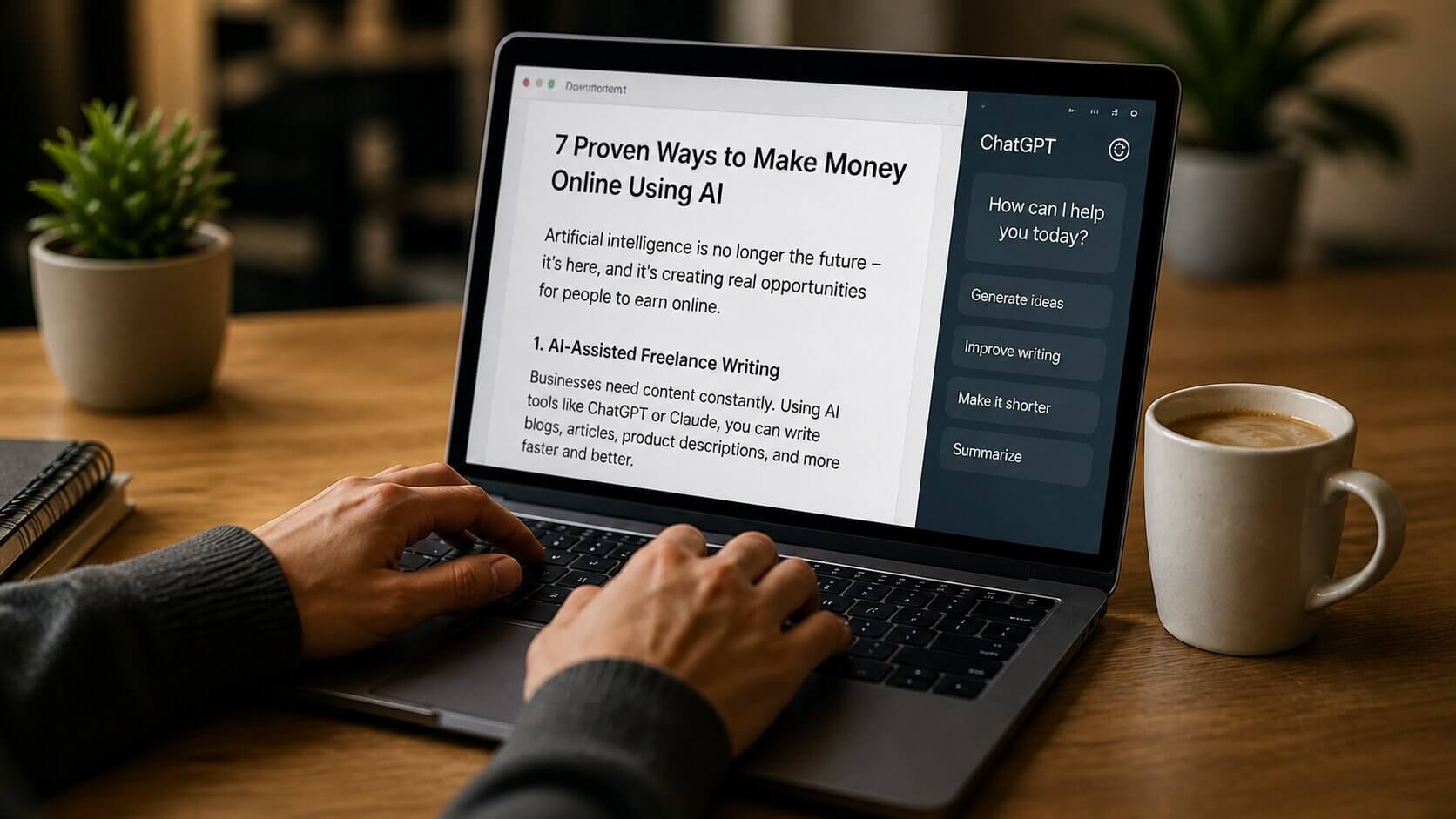 ✍️ AI-Assisted Freelance Writing$600–$3,000/mo
This is the lowest-friction starting point for most people. Businesses need content constantly — blog posts, email newsletters, product descriptions, social captions — and a huge percentage of them are willing to outsource it.
Where AI comes in: tools like Claude or ChatGPT can help you draft, outline, research, and rephrase at speed. What you bring: the judgment to tell good writing from bad, the edits that make it human, and the understanding of what the client actually needs.
The people who fail at this copy-paste AI output and deliver it raw. The ones who succeed treat it like a first draft that needs real work — and charge accordingly.
Marcus, a 28-year-old in Ohio, used to work in customer service. He started writing product descriptions on Fiverr, using AI to help him produce first drafts faster. Within three months, he had raised his rate from $10 per description to $35, and was handling about 40 orders a month. He didn’t pretend the AI was doing everything — he was genuinely editing and improving the output. That’s what made the difference.
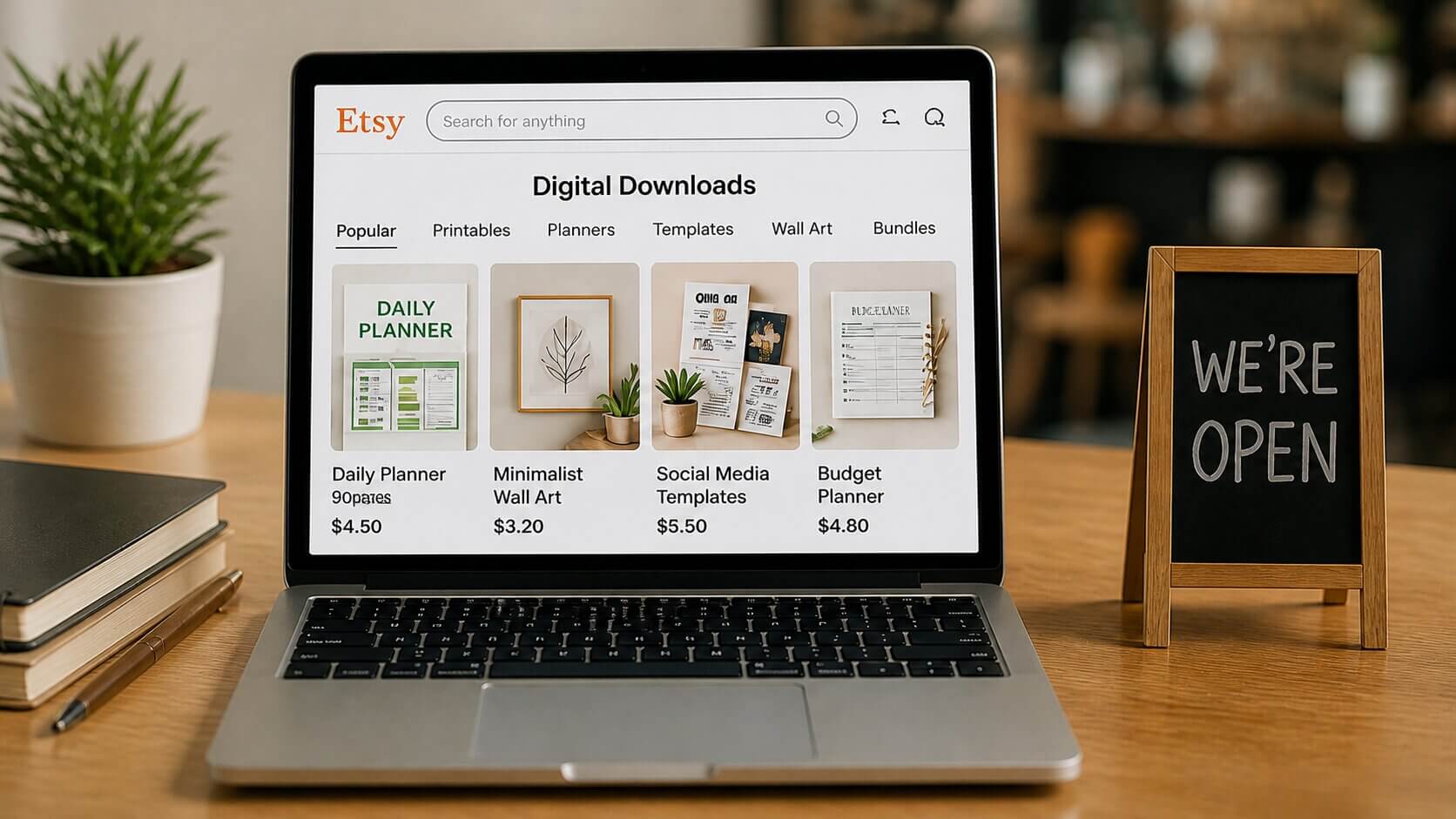 🎨 Selling AI-Generated Digital ProductsPassive income potential
Platforms like Etsy, Gumroad, and Creative Market are full of people buying digital downloads — printable planners, design assets, prompt packs, templates, icon sets, and AI-generated art prints.
You use tools like Midjourney, Adobe Firefly, or DALL-E to create the images or designs. You package them, write good product descriptions, and list them. After the initial work, sales can come in without you doing anything.
The catch? You need to research what actually sells. Spend time on Etsy’s bestseller lists before you make anything. The people who fail here make stuff they think is cool. The ones who succeed make stuff people are already searching for.
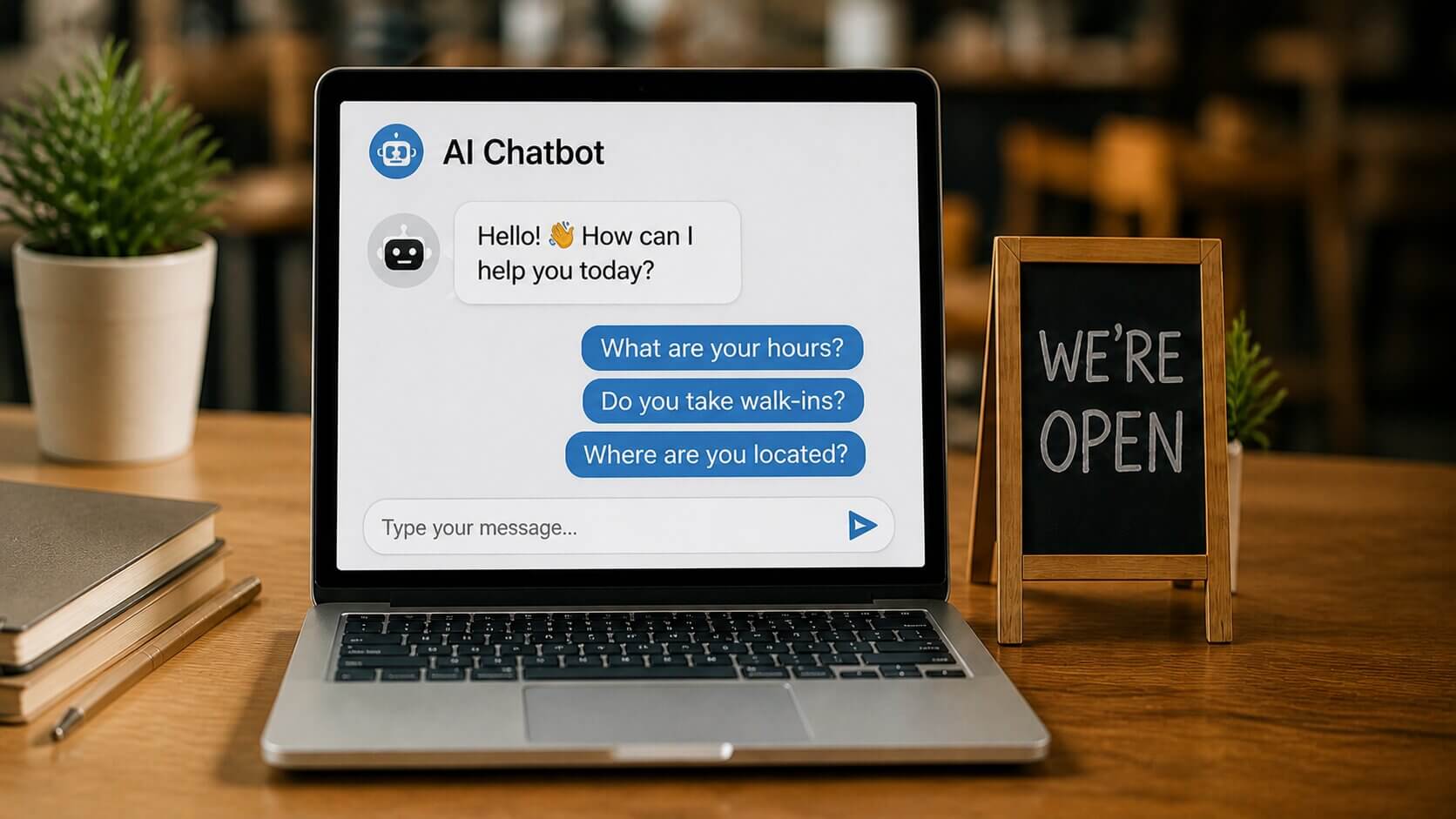
This one is underrated. Small businesses — restaurants, salons, law firms, dental offices — are drowning in repetitive customer questions. “What are your hours?” “Do you take walk-ins?” “What’s your cancellation policy?”
Tools like Voiceflow, ManyChat, and Tidio make it possible to build functional chatbots without writing a single line of code. You learn the tool, build a demo, approach local businesses, and charge a setup fee plus a small monthly retainer.
Most business owners don’t want to learn this stuff themselves. That’s the entire point of your service. If you can make their life easier, they’ll pay for it.
Claire, a freelancer in Manchester, spent two weekends learning Voiceflow through YouTube tutorials and the platform’s own documentation. She built a demo chatbot for a fictional bakery, recorded a short Loom video showing how it worked, and sent it to five local bakeries via Instagram DMs. Two replied. One hired her for £350 to set up a real version for their website. That turned into a referral to a hair salon. Six months later, she had eight recurring clients.

Faceless YouTube channels are booming — channels where the creator never appears on screen. AI tools make this more accessible than ever. You write a script (with AI’s help), generate a voiceover using ElevenLabs or similar, add stock footage in CapCut or Pictory, and publish.
Topics that work well: personal finance tips, history explainers, productivity, self-improvement. These audiences are large and they engage with content that feels useful, even if it’s not flashy.
This takes time to gain traction — usually four to six months before real ad revenue kicks in. But it compounds. Old videos keep getting views. Build a library, not just a few posts.
This is the higher-end play, and it takes more learning — but the ceiling is much higher. Businesses pay serious money for someone who can combine SEO knowledge with AI-assisted content production.
The workflow looks something like this: use tools like Semrush or Ahrefs to identify content gaps and keyword opportunities, then use AI to help produce that content at scale, then monitor and iterate based on results.
If you can show a client that you grew their organic traffic over 90 days, you don’t need to hustle for new business — they’ll refer you and stay loyal. The skill gap here is real, but it’s learnable in about three months of consistent effort.
Practical Tips I’d Give a Friend Starting Today
- →Pick one thing and stay with it for 60 days. The biggest mistake is jumping between methods every two weeks. You learn by doing, and you get good by repeating. Give yourself enough time to actually see results before deciding something doesn’t work.
- →Build something to show before you try to sell. Create 2–3 sample pieces — a mock blog post, a demo chatbot, a product listing. Having proof changes every conversation with a potential client.
- →Don’t race for the newest tool. Every week there’s a new platform promising to change everything. In reality, the tools that have been around for 12+ months are the ones with real tutorials, communities, and support. Learn those first.
- →Price on value, not hours. Because AI speeds you up, you might finish a project faster than expected. That’s your efficiency bonus — not a reason to lower your price. Clients pay for the result, not the time.
- →Start on platforms with built-in traffic. Fiverr, Etsy, Upwork. You don’t need your own audience yet. Use existing marketplaces to validate your offer, then branch out once you know what works.
Mistakes Worth Avoiding
I’ll keep this short because nobody needs a lecture. But a few things trip up almost every beginner.
Delivering raw AI output. You can always spot it — it’s technically fine but feels hollow. Clients notice. Editors notice. Platforms notice. Add your own voice, your own edits, your own judgment. That’s what you’re really selling.
Underpricing to “get started.” It feels logical at first — low prices attract clients faster, right? Sometimes. But it also attracts clients who don’t value your work and who drain your time. Charge something real from day one, even if it’s not huge.
Skipping the research phase. Before you sell digital products, check what’s actually selling. Before you pitch chatbot services, check if there’s a local market for it. Assumptions are expensive. A few hours of research saves weeks of wasted effort.
James, a teacher in Berlin, started selling AI-generated educational printables on Etsy — multiplication tables, reading comprehension worksheets, classroom organization templates. His first listing got zero sales for six weeks. He almost quit. Then he added better photos, rewrote his descriptions, and reduced his prices slightly on two listings as a test. One of them hit a bestseller tag. He earned €1,100 that month. He hadn’t changed the product — he’d changed how he presented it.
A Few Questions People Always Ask
The Honest Conclusion
Making money online using AI is real. Not in a “financial freedom by next quarter” way, but in a genuine, sustainable, build-something-over-time way.
The people who do well at this aren’t geniuses. They’re not all technical. They’re just consistent. They pick a direction, put in the early work that feels unrewarding, and don’t stop before it starts compounding.
You have more of what’s needed to do this than you probably think. The tools are accessible. The demand is real. The only thing between where you are and where you want to be is a decision to actually start — and then the discipline to not quit after week three.
Start small. Stay at it. Build proof. Then raise your prices.
Good luck — and seriously, you’ve got this. 👋