
Let’s skip the fluff. If you’re thinking about freelancing, you’ve probably already Googled yourself into a rabbit hole of listicles that all say the same five platforms. This isn’t that. This is the stuff I wish someone had told me on day one.
So here’s the thing — starting out as a freelancer is genuinely exciting and genuinely terrifying at the same time. You’ve got a skill. Maybe it’s writing, design, coding, video editing, data entry, whatever. And someone out there will pay you for it. The problem is: where do you even go to find that person?
The good news? There are platforms built exactly for this. The not-so-good news? Some of them are frustrating to break into as a beginner, and a few will waste your time if you don’t know what you’re walking into. Let me be honest with you about what actually works when you’re just starting out.
Why Platform Choice Actually Matters
A lot of people sign up for every freelancing platform they’ve ever heard of on the same weekend, then wonder why nothing happens. In reality, spreading yourself thin like that is one of the worst things you can do early on. You end up with five half-finished profiles and zero momentum.
Pick one or two platforms that match your skill level and the type of work you do. Focus there. Build a profile that actually looks like a human made it. Then go from there.
That’s not a rare story. It happens all the time. So let’s get specific about which platforms are actually worth your attention as a beginner.
The Best Platforms to Start With
1. Fiverr

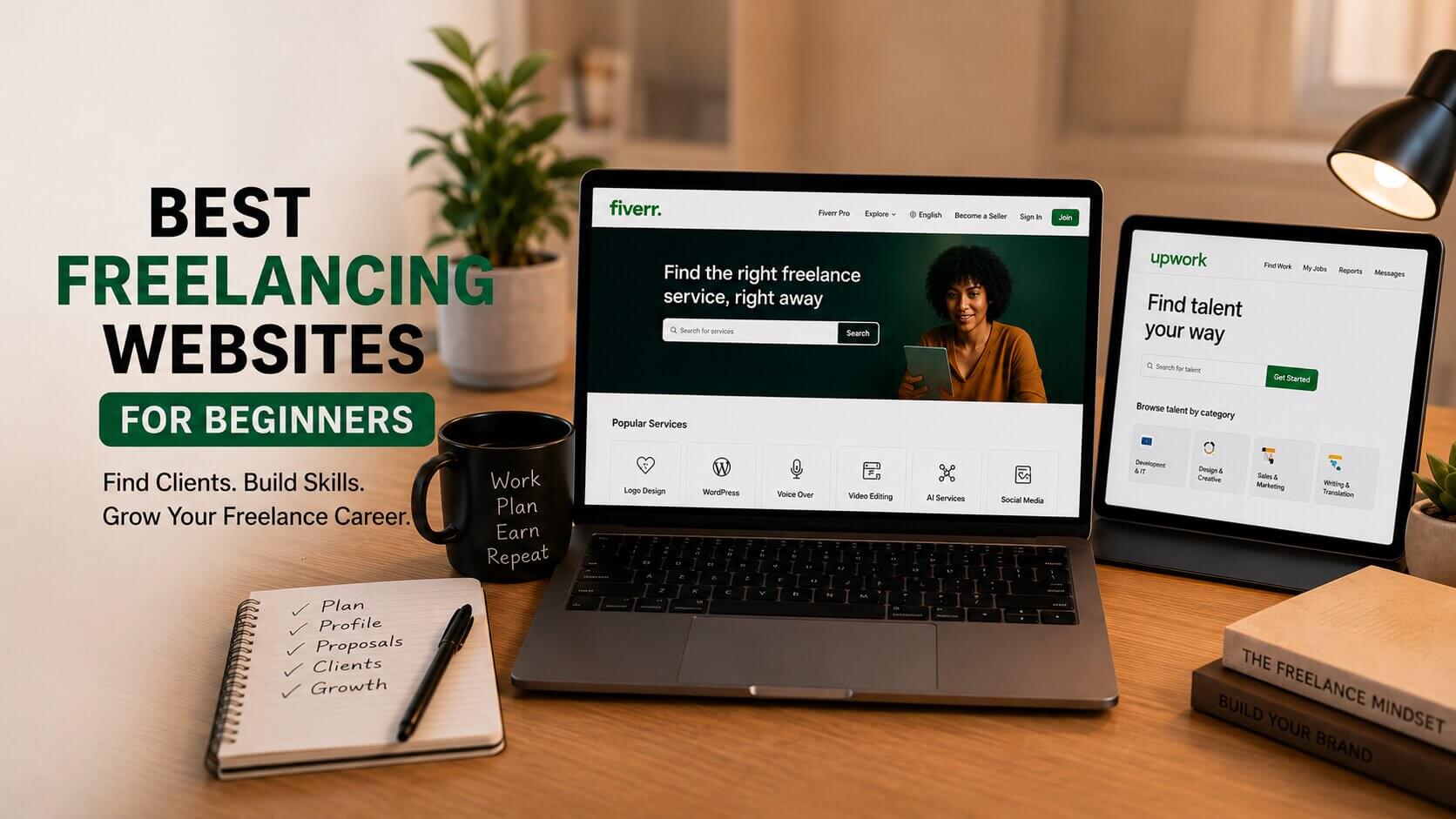
Fiverr is, honestly, the most beginner-friendly platform out there right now. The entire model is built around you creating “gigs” — packaged services that clients can browse and buy directly. You’re not hunting for jobs; clients come to your listing.
The catch? You need to put real effort into your gig title, description, and thumbnail image. Badly made gigs sit there collecting dust. But if you spend a few hours making a clean, clear, confident listing — especially in a niche that isn’t oversaturated — you can start getting orders fairly quickly.
Good for: Writing, logo design, voiceovers, social media posts, video editing, basic web tasks.
Watch out for: Fiverr takes 20% of every transaction. That stings at first, but it’s the cost of access to a massive buyer pool.
2. Upwork
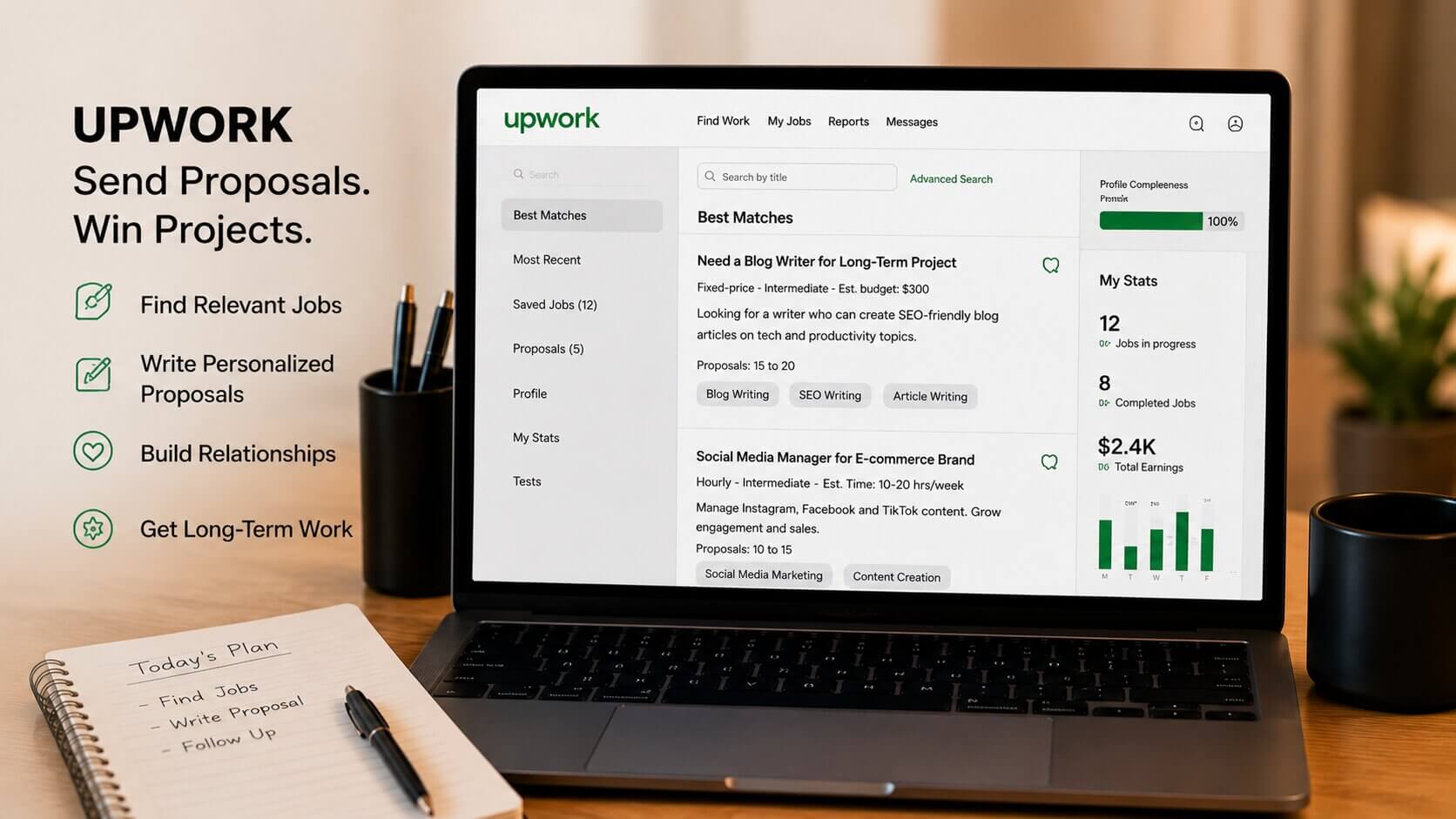
Upwork is the big one. It’s more professional, more competitive, and frankly a little harder to break into — but if you can get traction here, the earning potential is significantly higher than most other platforms.
You apply for jobs by sending proposals, and clients review them before reaching out. The key as a beginner is to NOT compete on price alone. Write proposals that actually address what the client said in their job post. Most beginners copy-paste a generic intro. If you reference specific details from the listing, you’ll stand out immediately.
Good for: Writing, development, marketing, virtual assistance, accounting, research, design.
Watch out for: The “Connects” system means you spend tokens to apply for jobs. Spend them wisely — don’t spray applications everywhere.
3. Freelancer.com
Freelancer has been around a long time. It works similarly to Upwork — you bid on projects and hope clients pick you. The competition is intense and sometimes the rates can feel depressingly low, especially for writing and design.
That said, it’s easier to get your first project here than on Upwork, because the barrier to entry is lower. Think of it as a training ground. Land a couple of projects, build some reviews, then level up to Upwork.
Good for: Data entry, simple coding tasks, translation, short writing projects.
4. Contra
Contra is newer and honestly underrated. It’s a zero-commission platform — meaning they don’t take a cut of your earnings. That alone makes it worth checking out. The community is smaller, but the clients tend to be more serious, and the platform has a much cleaner, more modern feel than the older giants.
If you’re a writer, designer, or marketer, Contra is worth building a profile on. It works more like a portfolio + marketplace combo, which suits creative professionals well.
5. PeoplePerHour
PeoplePerHour is popular in the UK and Europe but has a solid global user base. It’s a middle ground between Fiverr and Upwork — you can post your own “offers” (like Fiverr gigs) or bid on projects. For beginners in creative fields, it’s worth a look, especially if you want a mix of both models.
What Nobody Tells You About Landing Your First Client
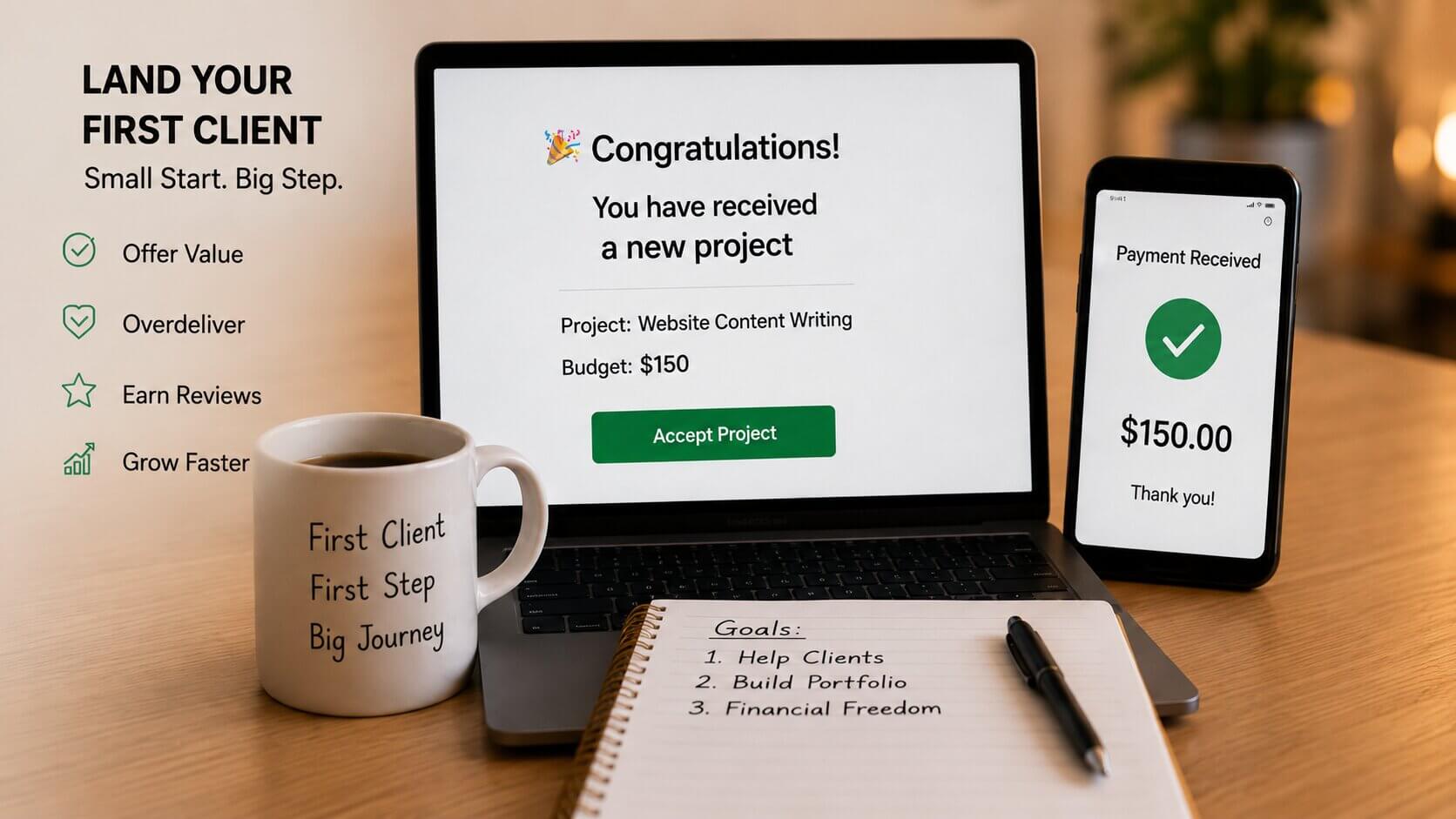
Here’s a hard truth: your first few clients are the hardest to get. Not because you’re bad at what you do, but because you have no reviews yet. Clients trust reviews. So how do you get past that chicken-and-egg problem?
- Offer your first one or two projects at a slightly lower rate in exchange for a detailed review. Just once or twice — don’t make discounting a habit.
- Do a ridiculously good job on your first gig. Overdeliver. Finish early if you can. The review you get from that effort is worth more than the fee you charged.
- Write proposals like a person, not a robot. Read the client’s post carefully. Mention something specific. Ask one smart question. Clients notice this stuff.
- Make your profile photo an actual photo of you, with decent lighting. It sounds minor. It isn’t. Profiles with real photos get more trust.
- Niche down. “I’m a writer” is weak. “I write email sequences for SaaS companies” is a selling point.
A Platform to Avoid (At Least Early On)
Toptal and similar “elite” freelancing networks are not for beginners. They’re vetted platforms that accept only a small percentage of applicants, and they require real experience and a portfolio before you’ll even be considered. There’s no shame in that — just don’t waste energy applying there when you’re just getting started.
Also, be cautious of platforms that charge you upfront fees to access jobs. Legitimate freelancing platforms make money by taking a cut of your earnings, not by charging you to see listings. If something asks for a subscription before you can even browse real work, that’s a red flag.
My Honest Recommendation
If I had to tell a friend with zero experience exactly what to do, I’d say this: start on Fiverr if you offer a packaged, creative service (design, writing, video, etc.). Start on Upwork if you’re in tech, marketing, or business services and can write a decent proposal. Give it 90 days of consistent effort before judging whether it’s working.
The people who fail at freelancing usually quit at the 30-day mark because “nothing is happening.” The people who succeed are usually the ones who stuck around long enough to get their first review, then their second, then started getting repeat clients. It compounds. Slowly at first, then faster.
Quick FAQ
Do I need a PayPal account to get paid on these platforms?
Most platforms support PayPal, but many also offer direct bank transfers, Payoneer, or Wise. Payoneer is particularly popular for freelancers in countries where PayPal payouts aren’t available or have high fees. Check your platform’s withdrawal options before you sign up.
Can I freelance with no experience at all?
Yes — but “no experience” and “no skills” are different things. You don’t need professional experience to freelance. You do need to be able to actually do the work. If you can write well, design something presentable, or build a basic website, that’s enough to start. Your first projects will teach you the rest.
How long does it take to make real money freelancing?
Realistically, expect one to three months before you land your first few paying clients, and six to twelve months before freelancing becomes a reliable income. That timeline shortens dramatically if you’re consistent, niche down, and treat your profile like a serious business asset.
Should I be on multiple platforms at once?
Not at the start. Focus on one platform until you have at least 10 reviews and a steady flow of work. Then you can diversify if you want to. Trying to manage multiple platforms with no momentum on any of them is a fast path to burnout and zero results.
What’s the best skill to freelance with right now?
High-demand skills right now include content writing (especially for SEO), video editing (especially short-form content), web development, graphic design, and virtual assistance. But honestly, the “best” skill is the one you’re actually good at and can do consistently well. Chasing trends without real ability rarely works out.
Go. Actually Start.
Look, I know this is a lot to take in. But here’s the thing — reading about freelancing and actually doing it are very different experiences. At some point, you just have to make the profile, write the first proposal, and send it.
It will probably be a little awkward at first. That’s fine. Everyone’s first proposal is a bit rough. Everyone’s first gig thumbnail isn’t perfect. The important thing is that you’re in the game and learning from real feedback, not just theory.
Pick a platform. Set it up properly. Reach out to clients like a human being. Be patient. And don’t quit after two weeks just because it’s quiet — that’s when most people give up, and it’s also when sticking around starts to pay off.
You’ve got this. Now go build something.