

Most bloggers work harder than they need to. Here’s a more honest look at what actually moves the needle — and the tools that make it possible.
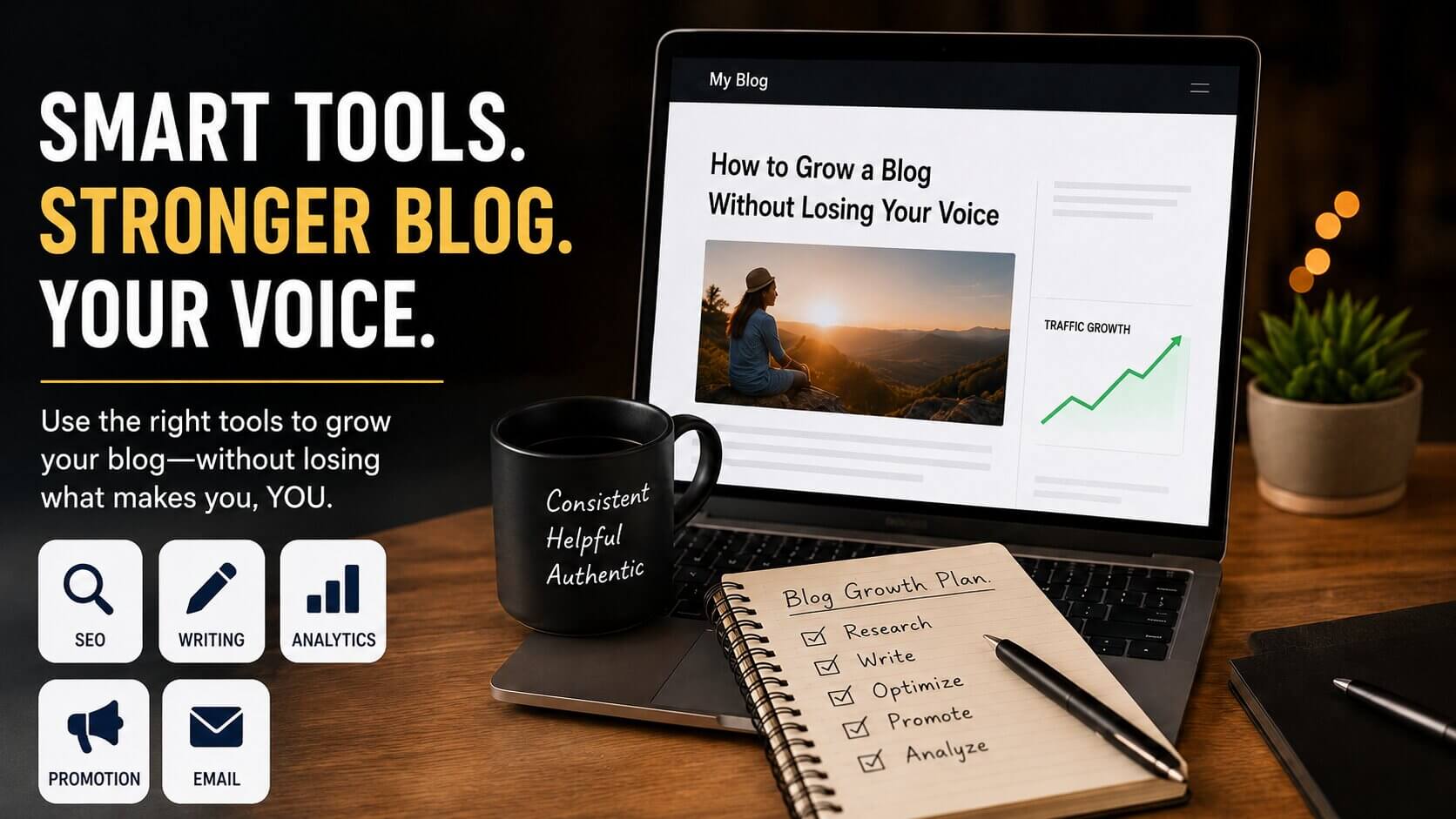
Let me be honest with you right from the start: growing a blog in 2025 is both easier and harder than it’s ever been. Easier, because the tools available to everyday writers are genuinely impressive. Harder, because every other blogger is using the same tools — and most of them are producing content that sounds exactly the same.
So the real question isn’t “can tools help me grow my blog?” The answer to that is obviously yes. The real question is: how do you use these tools without becoming just another forgettable voice on the internet?
I’ve been blogging in some form since 2017. I’ve watched the landscape change dramatically. And I can tell you from experience — the blogs that grow aren’t the ones posting the most. They’re the ones that are consistent, strategic, and actually useful to the people reading them. Let’s talk about how to get there.
First, Get Clear on What Your Blog Is Actually For
This sounds obvious, but you’d be surprised how many people skip it. Before any tool helps you, you need to know your niche, your audience, and — honestly — why anyone should read your blog instead of the ten others covering the same topic.
A blogging tool can help you write faster. It cannot tell you what to stand for.
So do that first. Write it down. Something like: “I write about budget travel for solo women over 40 who are tired of generic travel advice.” That’s specific enough to actually build around. “I write about travel” is not.
Quick tip
If you can’t explain your blog’s purpose in one sentence, your readers can’t either. That’s usually why growth feels stuck.
Content Research That Actually Saves You Time
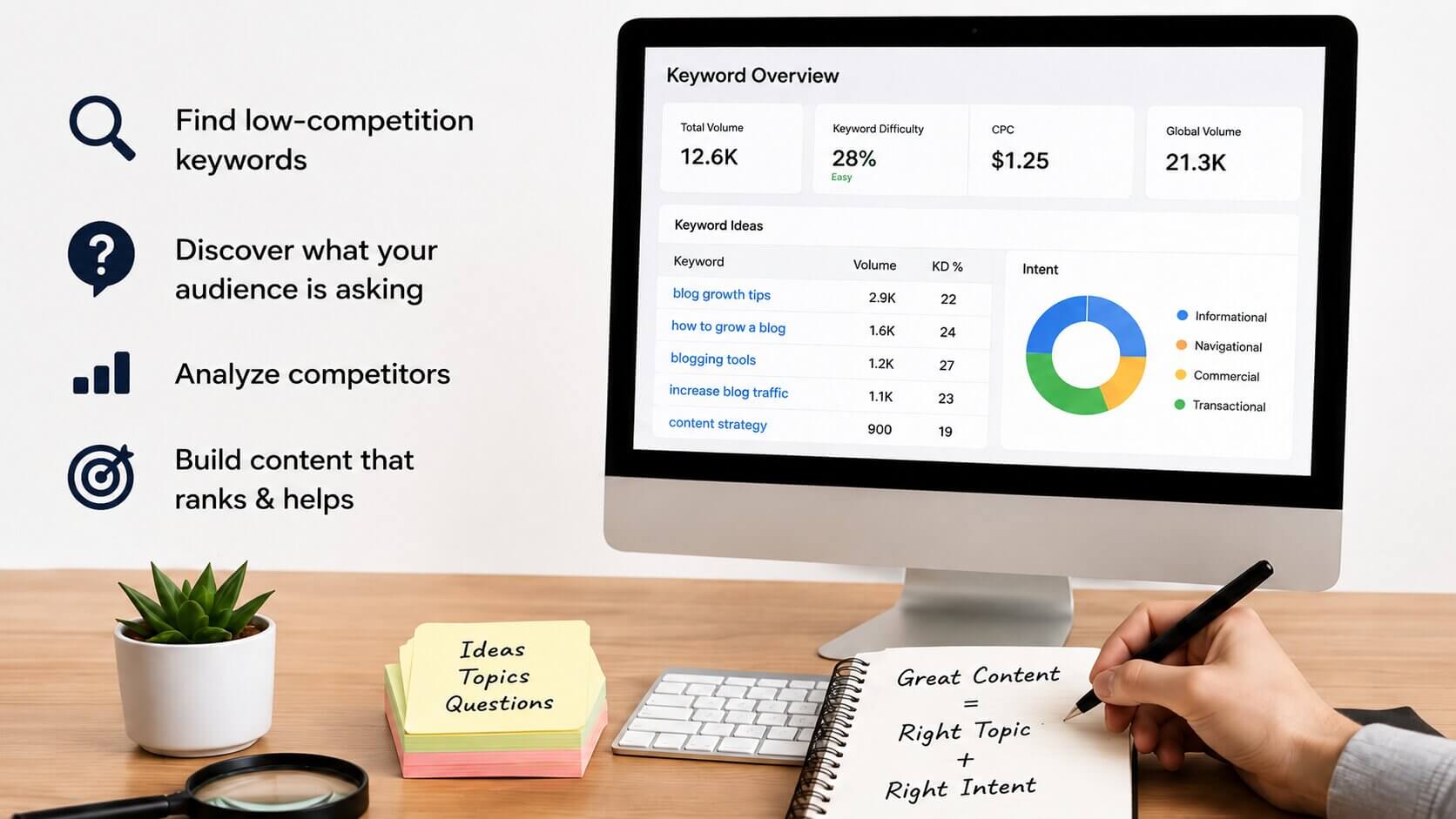
Here’s where things start to get interesting. One of the biggest time sinks for any blogger is figuring out what to write about. You could spend hours going down keyword rabbit holes, stalking competitors, and still end up with a half-baked topic list.
Modern research tools — keyword explorers, question aggregators, content gap finders — can compress that process dramatically. Tools like Semrush, Ahrefs, and even free options like Answer the Public help you find what your audience is actually searching for, not what you assume they want.
- Use keyword tools to find low-competition, high-intent questions your audience is already asking
- Look at “People Also Ask” boxes in Google to find natural content angles
- Check competitor blogs to find topics they haven’t covered well (that’s your opening)
- Keep a running idea list — you’ll be amazed how ideas cluster and connect once you start tracking them
A friend of mine runs a personal finance blog. She was writing long, detailed guides about retirement accounts — good stuff, genuinely useful — but traffic was flat. When she finally looked at her keyword data, she realized her audience was actually searching for things like “how much should I save in my 30s” and “is a Roth IRA worth it if I make under $50k.” Same broad topic. Totally different search intent.
She restructured three posts around those questions. Within six weeks, two of them hit page one. Not because she wrote more — because she finally answered what people were actually typing into Google.
Writing Better Content, Faster (Without Sounding Like a Robot)

In reality, most bloggers don’t have a writing quality problem. They have a writing speed problem — combined with a blank page problem. You know what you want to say, but getting it from your brain to the screen is slow and frustrating.
Writing assistance tools are genuinely useful for the drafting phase. They’re good at helping you push through blocks, flesh out outlines, and explore angles you hadn’t considered. Think of them as a very fast brainstorming partner.
But here’s the thing — and this is important — the final voice has to be yours. The tools give you raw material. You shape it. If you skip that step, your content will be technically fine and completely forgettable. Readers can feel when a post has no actual human behind it. They leave. Quickly.
My personal rule: draft with help, always edit by hand. Read it out loud. If it doesn’t sound like something you’d say in a conversation, rewrite it until it does.”
“The tools give you raw material. You shape it. If you skip that step, your content will be technically fine and completely forgettable.
SEO Without Losing Your Mind
SEO has a reputation for being either impossibly complex or totally gameable — neither of which is quite true. The basics are straightforward and honestly haven’t changed that much:
- Write about topics people actually search for
- Use clear, descriptive headings that match search intent
- Make your page load fast and look decent on mobile
- Build internal links between related posts
- Get a few external sites to link back to your content (this part takes time — that’s normal)
Tools like Rank Math or Yoast (for WordPress) will flag the technical stuff as you write. Honestly, if you’re hitting green on those basic checks and your content is genuinely helpful, you’re doing better than most bloggers already.
Don’t obsess over ranking immediately. Brand new posts from new blogs rarely rank fast — that’s just how it works. Focus on producing solid content consistently for at least six months before you panic about numbers.
Promoting Your Blog Without Being Annoying
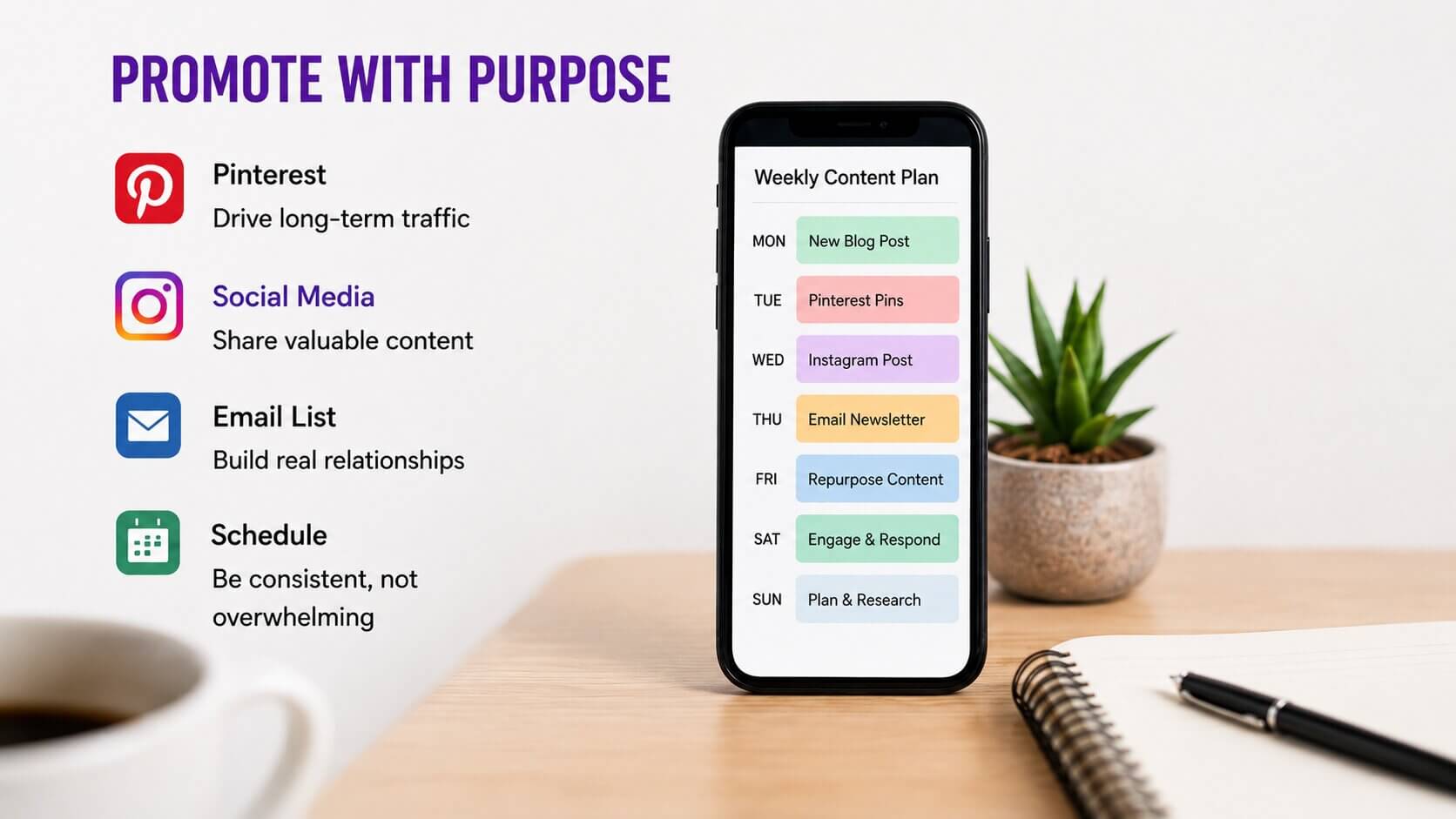
Publishing a post and then doing nothing is a very common mistake. The “build it and they will come” mentality kills more blogs than bad writing does.
You need a simple promotion routine. Nothing crazy — but intentional.
There’s a food blogger I follow — Jamie, she runs a recipe site focused on high-protein meals for people who hate cooking. When she started out, she was posting three times a week with zero promotion strategy. Traffic was miserable.
She pulled back to two posts a week and spent the time she saved on distribution: pinning to Pinterest, repurposing key tips into short social posts, and emailing her small list. Traffic tripled in four months. Not because she wrote more — because more people actually saw what she was writing.
Social scheduling tools — Buffer, Later, or even native schedulers — let you batch your promotion work so it doesn’t eat your entire week. Spend one hour on Monday scheduling your content distribution for the week. Done.
Email is still, by the way, far more valuable than social media for blog growth. If you’re not building a list, start now. A free Mailchimp or MailerLite account is all you need to begin.
Analytics: What to Actually Look At

Most bloggers either ignore analytics completely or obsess over metrics that don’t matter. Page views feel good but tell you very little. Here’s what I’d focus on instead:
- Organic search traffic — is it growing month over month? That’s a real health signal
- Average time on page — are people actually reading what you wrote?
- Email subscriber growth — this is your real audience, the people who want more
- Top-performing posts — double down on what’s working, write more like it
Google Analytics 4 is free and gives you all of this. Check it once a week, not every day. Daily data is noisy and will make you anxious for no reason.
Staying Consistent (This Is Honestly the Hardest Part)
Every tool in the world means nothing if you publish sporadically. Consistency compounds. One post a week for a year is 52 pieces of content — that’s a real asset. One post a week for three months, then nothing for two months, then a burst of five posts — that goes nowhere.
Content calendars help enormously here. Even a simple spreadsheet with your planned topics, publish dates, and status (idea / drafted / scheduled) gives your work structure. There are tools for this — Notion, Trello, even a Google Sheet — but the specific tool matters less than actually using it.
Batch writing, if it works for your schedule, is also underrated. Some bloggers write all their posts for the month in one week. That sounds intense but it means they’re never scrambling, never posting something half-baked because a deadline crept up on them.
FAQ
Realistically, 6–12 months of consistent publishing before you see steady organic traffic. That’s not discouraging — it’s just how content compounds. Blogs that last are built slowly.
No. One high-quality post per week is plenty, especially early on. Quality and consistency beat volume almost every time. Daily posting with no strategy is just noise.
Google Search Console (free, non-negotiable), Google Analytics (free), MailerLite for email (free up to 1,000 subscribers), and Ubersuggest or Answer the Public for keyword research. That’s honestly all you need to start.
Not strictly, but it helps — especially Pinterest, which sends real blog traffic. Pick one or two platforms where your audience actually hangs out and be consistent there. Don’t try to be everywhere.
Look at the blogs ranking on page one. If they’re all massive media companies with huge teams, you’ll need a very specific angle to compete. Find a sub-niche where smaller, independent blogs are ranking — that’s where you have room.