
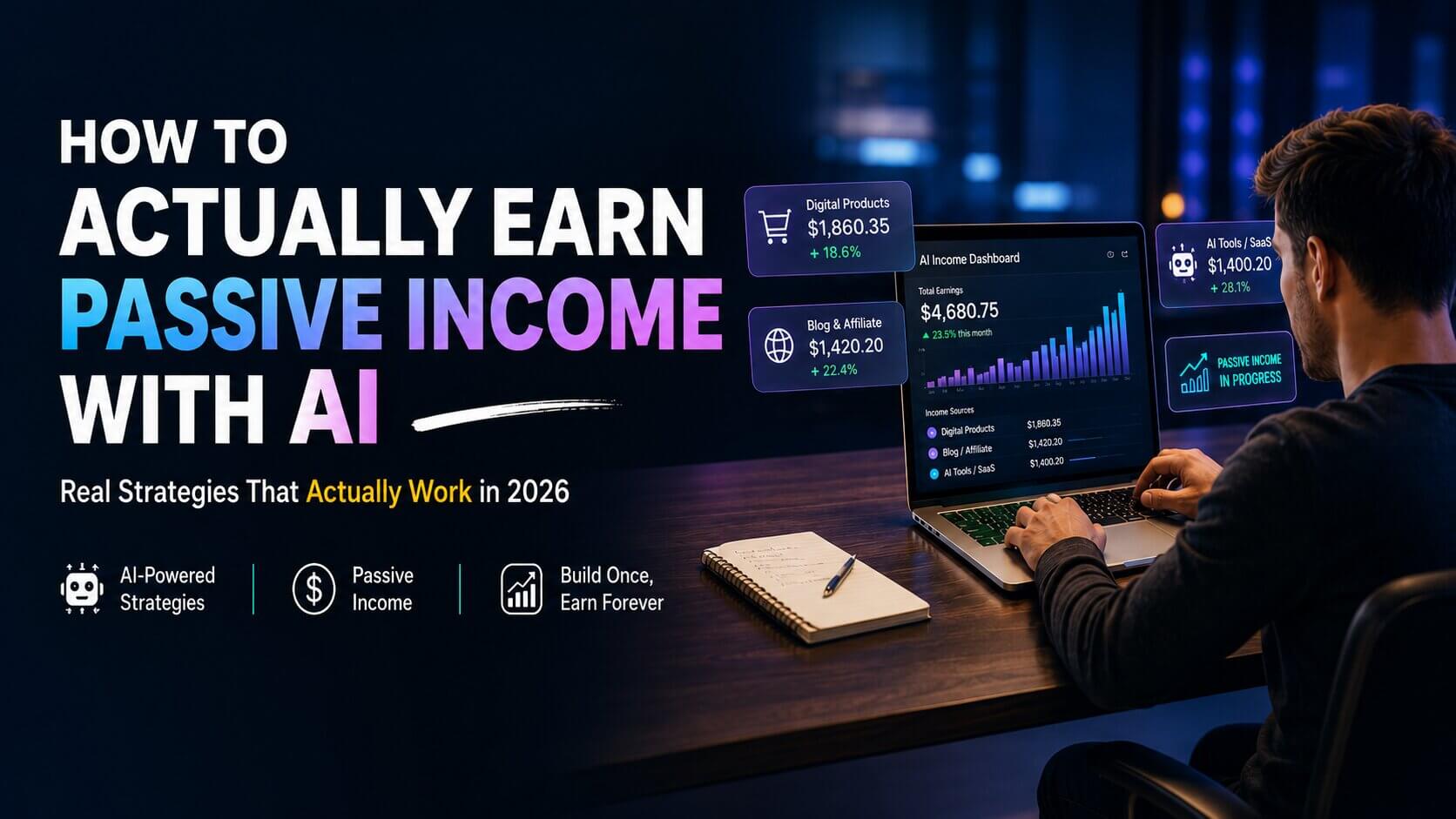
Okay, let me be upfront with you from the start. When most people hear “passive income with AI,” their eyes either light up with excitement — or roll straight to the back of their heads. And honestly? Both reactions make sense.
There’s a lot of garbage advice floating around on this topic. People selling $997 courses promising you’ll make $10,000 a month by next Tuesday. Dream on. But buried under all that noise, there are some genuinely solid ways to build income streams using AI tools — if you’re willing to put in the upfront work and be realistic about timelines.
I’ve spent a good chunk of time watching how this space has evolved, talking to people who are actually doing it (not just selling the idea of doing it), and testing things myself. So let me share what I’ve found. Some of it will surprise you.
01 First — What “Passive” Really Means
Here’s the thing that nobody talks about: almost nothing is truly passive, especially at the beginning. Passive income doesn’t mean zero work. It means the work you do upfront keeps paying you long after you stop actively doing it.
Think of it like planting a fruit tree. You dig the hole, water it for months, protect it from pests. But eventually — if you did the work right — it just drops fruit every season without much effort from you.
AI changes the equation by making that upfront work significantly faster and cheaper than it used to be. What once took a team or thousands of dollars can now be done by one person with the right tools and a few hours a week.
02 Selling Digital Products (The Underrated One)
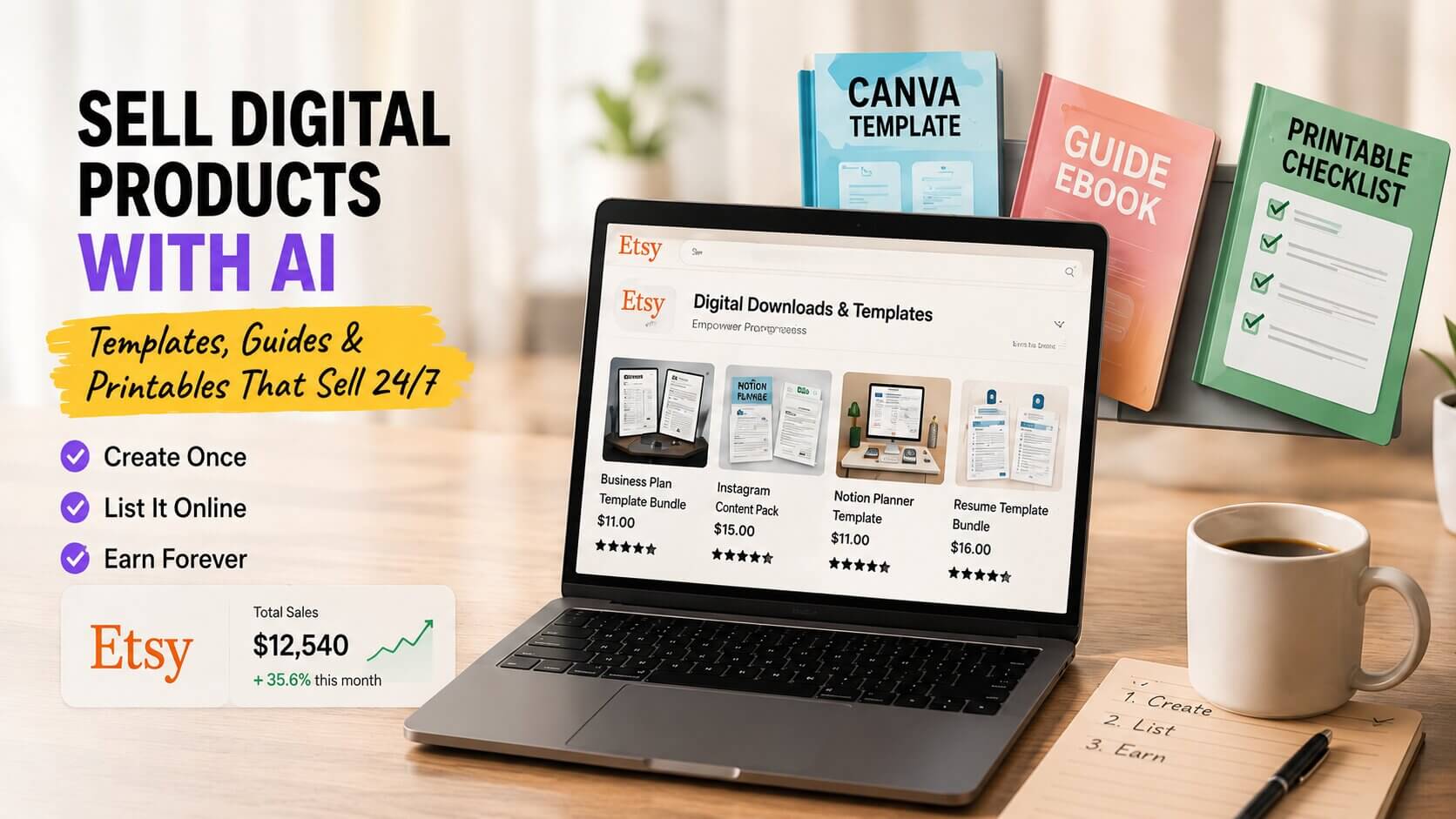
This is probably the most overlooked option, and it’s one I keep coming back to. Digital products — templates, guides, mini-courses, prompt packs, printables — require zero inventory, zero shipping, and scale endlessly. You make it once, sell it forever.
AI tools have made creating these faster than ever. Writing a comprehensive 30-page guide that used to take weeks? You can have a solid first draft in an afternoon, edit it over a few days, and publish it by the weekend. Same with visual templates using design tools that have AI built in.
A freelance graphic designer I know started selling Canva templates on Etsy. She used AI to brainstorm 50 niches, picked three with decent demand, and built out template packs for each. She spent maybe three weekends on it. That was about eighteen months ago. Now she makes somewhere between $600–$1,200 a month from those listings, and she barely touches them anymore. She added new packs occasionally at first, less so now. Classic slow build, genuine passive result.
The key is picking a specific enough niche. “Business templates” is too broad. “Instagram story templates for real estate agents” — now you’re talking. Specificity beats competition every time.
03 Content Sites with AI-Assisted Writing
Niche websites monetized with ads (like Mediavine or AdThrive) or affiliate links have been around forever. The AI angle is that you can now build out content much faster — though I want to be clear here: quality still matters enormously.
Google has gotten genuinely good at filtering out low-effort, thin content. Sites that spam out hundreds of AI-generated articles with no real editing or expertise behind them are getting slapped hard in search rankings. So this isn’t a “set it and forget it” play right out of the gate.
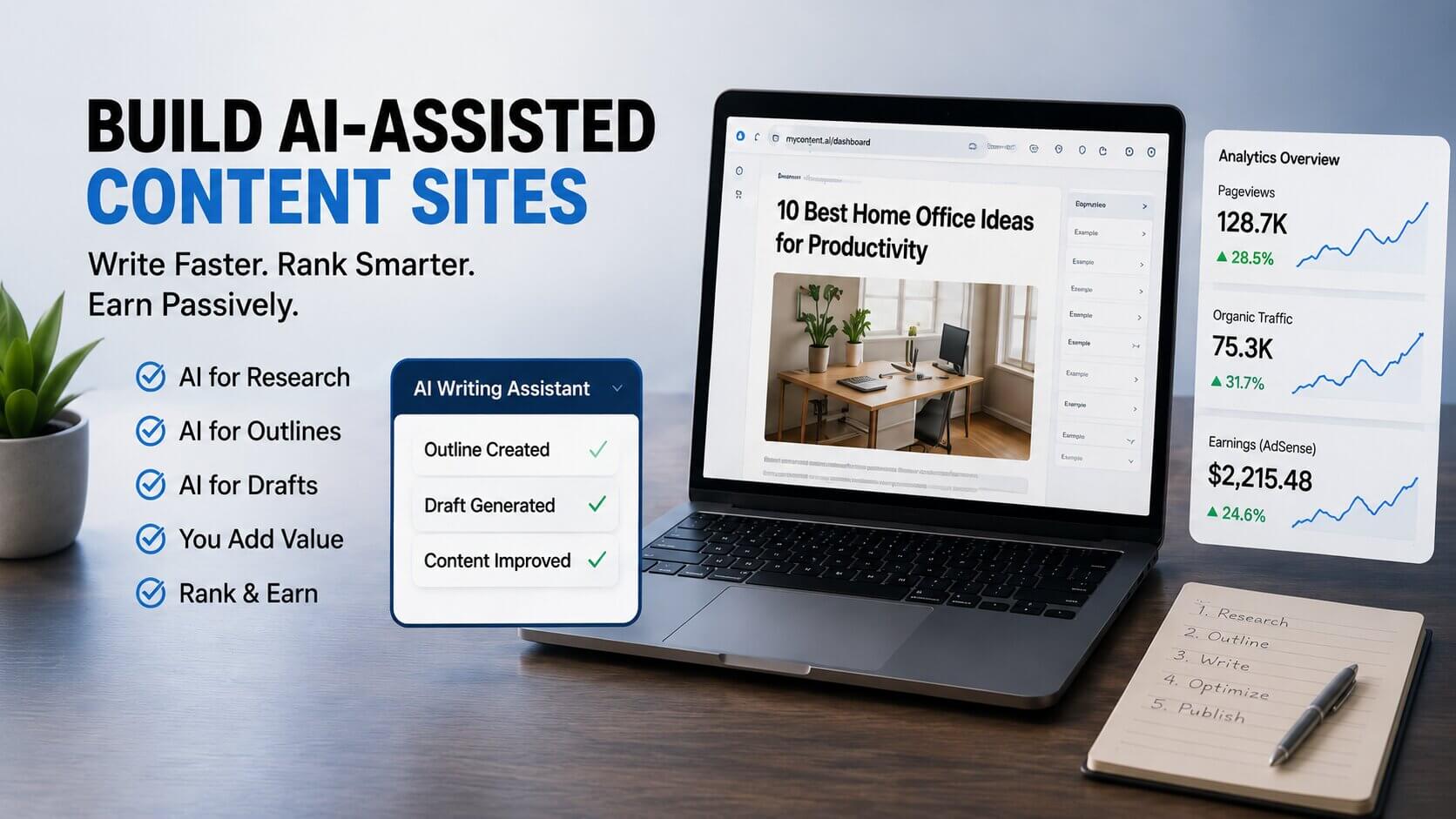
What works is using AI as a drafting and research assistant, then layering in your own actual knowledge, experience, or unique perspective. A cooking site where someone who actually cooks is using AI to help them write faster — that’s a winning combination. A cooking site where someone with no culinary knowledge is just hitting “generate” a hundred times — that’s not going to last.
- Pick a niche you know something about, or are genuinely curious enough to learn
- Use AI to help with outlines, first drafts, and research summaries
- Always rewrite, add real examples, and fact-check before publishing
- Focus on helpful, specific content over high-volume keyword stuffing
- Monetize with display ads once you hit traffic thresholds, or affiliate links earlier
Realistically, a niche site takes six to twelve months to start showing meaningful returns. But once it does, the income is genuinely hands-off most of the time.
04 Building and Selling AI-Powered Tools
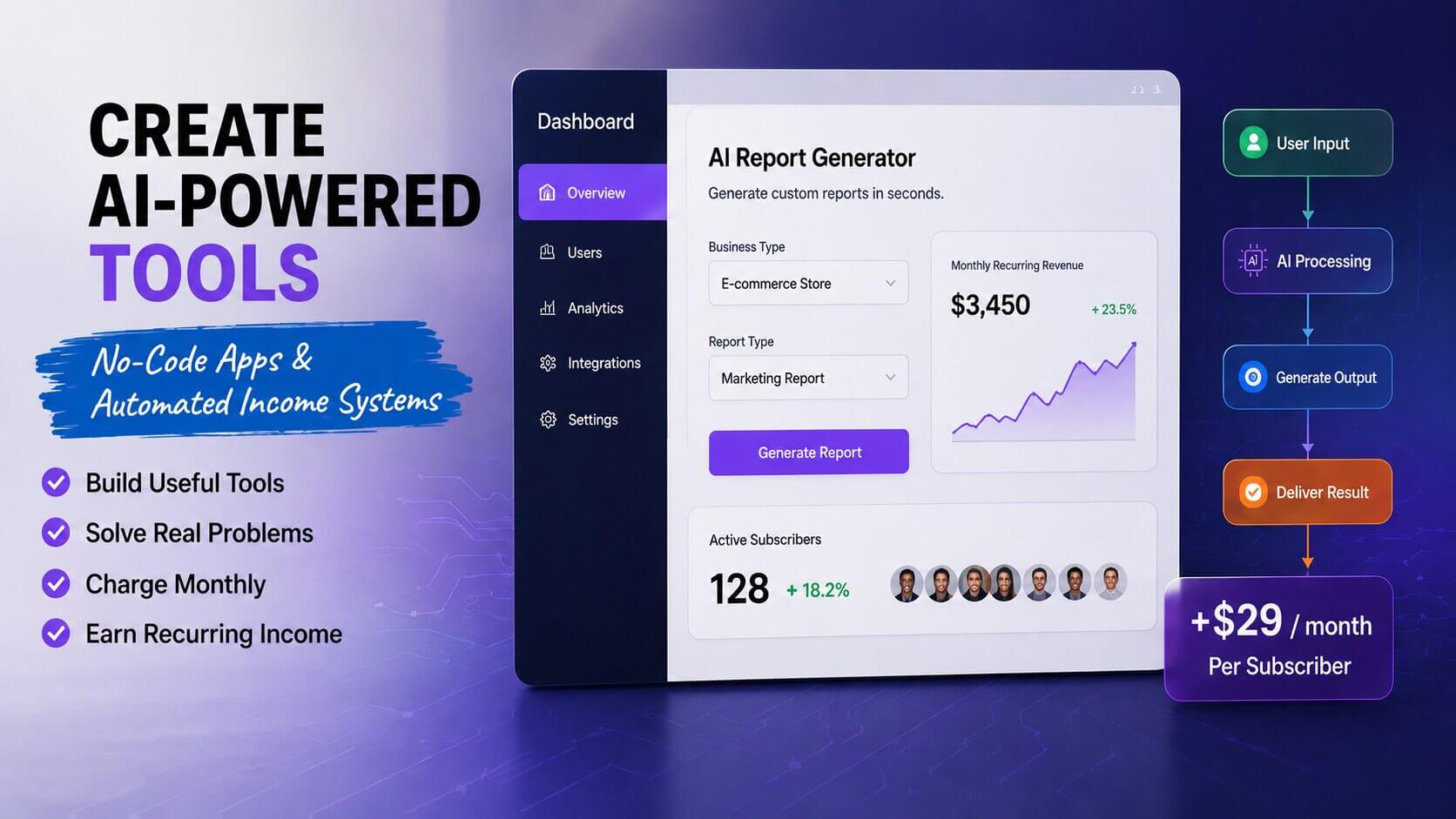
This one requires a bit more technical comfort, but not nearly as much as you might think. No-code and low-code platforms have made it possible for people without traditional programming backgrounds to build simple but useful tools — things like text generators, automated report builders, custom chatbots for specific industries, or workflow automators.
Imagine a small business consultant who got tired of writing the same types of reports over and over. She spent a weekend building a simple tool on a no-code platform that takes a client’s basic info and generates a customized market analysis draft. She listed it on a platform for SaaS tools at $29/month. Even if she gets 40 subscribers, that’s over $1,100 recurring monthly income — from one weekend project. The ongoing maintenance is minimal.
In reality, the hardest part isn’t the building. It’s the marketing and finding your first 20–30 paying customers. That’s where people tend to give up too early. The tool works fine; they just don’t promote it enough.
05 Licensing AI-Generated Art or Stock Assets
In my opinion, this one is the most underestimated right now — and also the most misunderstood.
Platforms like Adobe Stock, Shutterstock, and several specialized AI art marketplaces accept AI-generated images, provided you follow their submission guidelines. People who’ve approached this strategically — focusing on specific commercial niches that are genuinely underserved — are quietly making consistent income from it.
The mistake most people make is generating generic stuff: sunsets, people smiling, coffee cups. The market is already saturated with that. The opportunity is in the specific: niche business concepts, unusual cultural illustrations, specific industry scenarios that stock libraries are thin on. Do a bit of research before you generate anything.
Music is another angle here. AI-assisted music for content creators — background tracks for YouTube videos, podcasts, and social media — has real, ongoing demand. Several licensing platforms let you upload original compositions and collect royalties when creators use them.
06 The Honest Part (Most Guides Skip This)
Let me be honest with you for a second. Most people who try to build AI-assisted passive income streams give up within the first two months. Not because the strategies don’t work — but because the results take longer to appear than they expected, and the initial work feels tedious.
In reality, this is just how any business works. The AI part helps you move faster and do more with less. But it doesn’t remove the fundamental truth that building something worthwhile takes time, iteration, and a certain amount of stubbornness.
The people I’ve seen succeed at this tend to have one thing in common: they treat it like a slow burn, not a lottery ticket. They pick one income stream, work on it consistently, and don’t jump to the next shiny thing the moment progress feels slow.
That’s boring advice. But it’s true.
FAQ
Do I need technical skills to get started?
For most of the strategies here — no. Selling digital products, content sites, and stock assets require very little technical background. Building tools does help if you have some familiarity with no-code platforms, but there are plenty of tutorials that can get you up to speed. Start with what feels accessible and grow from there.
How much can you realistically earn?
This depends heavily on the strategy, your niche, and how much consistent effort you put in upfront. A niche digital product store might earn $300–$800/month after six months of work. A well-executed content site could reach $2,000–$5,000/month after 12–18 months. AI tool licensing is more variable. Treat early income projections skeptically — most people underestimate the timeline and overestimate the early results.
Is this still worth starting in 2026?
Yes — but the landscape is more competitive than it was two or three years ago. The window for “first mover” advantage on a lot of these strategies has mostly closed. What matters now is quality, specificity, and niche selection. Generic efforts get buried. Thoughtful, well-executed ones still perform.
Which strategy is the fastest to see income from?
Digital products tend to show results fastest — you can list something and make a first sale within days if you have an existing audience or spend some time on promotion. Content sites are the slowest (6–18 months is normal). AI tools fall somewhere in the middle depending on your marketing effort.
Can I do this alongside a full-time job?
Absolutely — most people start this way. You don’t need to quit anything. A few focused hours per week is enough to make meaningful progress, especially with AI tools helping you work more efficiently. The key is consistency over intensity.
So, Where Do You Start?
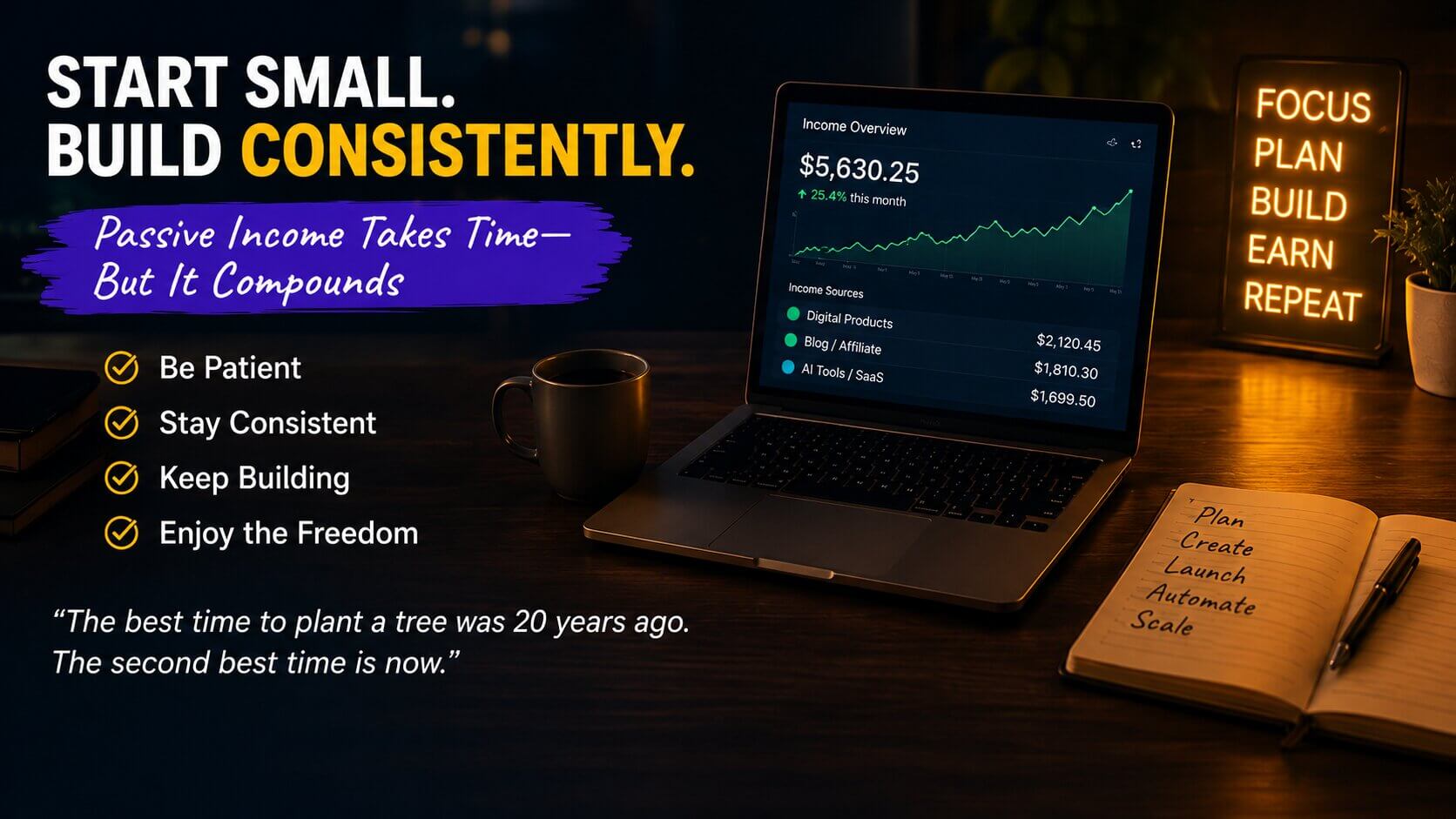
Pick one thing. Seriously — just one. Read about it, understand the basics, and take a small concrete action this week. Maybe that’s researching a niche for digital templates. Maybe it’s drafting the outline of a blog post for a content site you’ve been thinking about.
The strategy matters far less than the starting. Because once you start, you get real feedback, you adjust, and you actually learn — which is a hundred times more valuable than consuming more content about passive income strategies (including this article).
You’ve got better tools available to you than any generation before you has had access to. Use them. Be patient. Build something real.
And if it takes longer than you hoped? That’s not failure. That’s just how building anything worthwhile actually goes.